
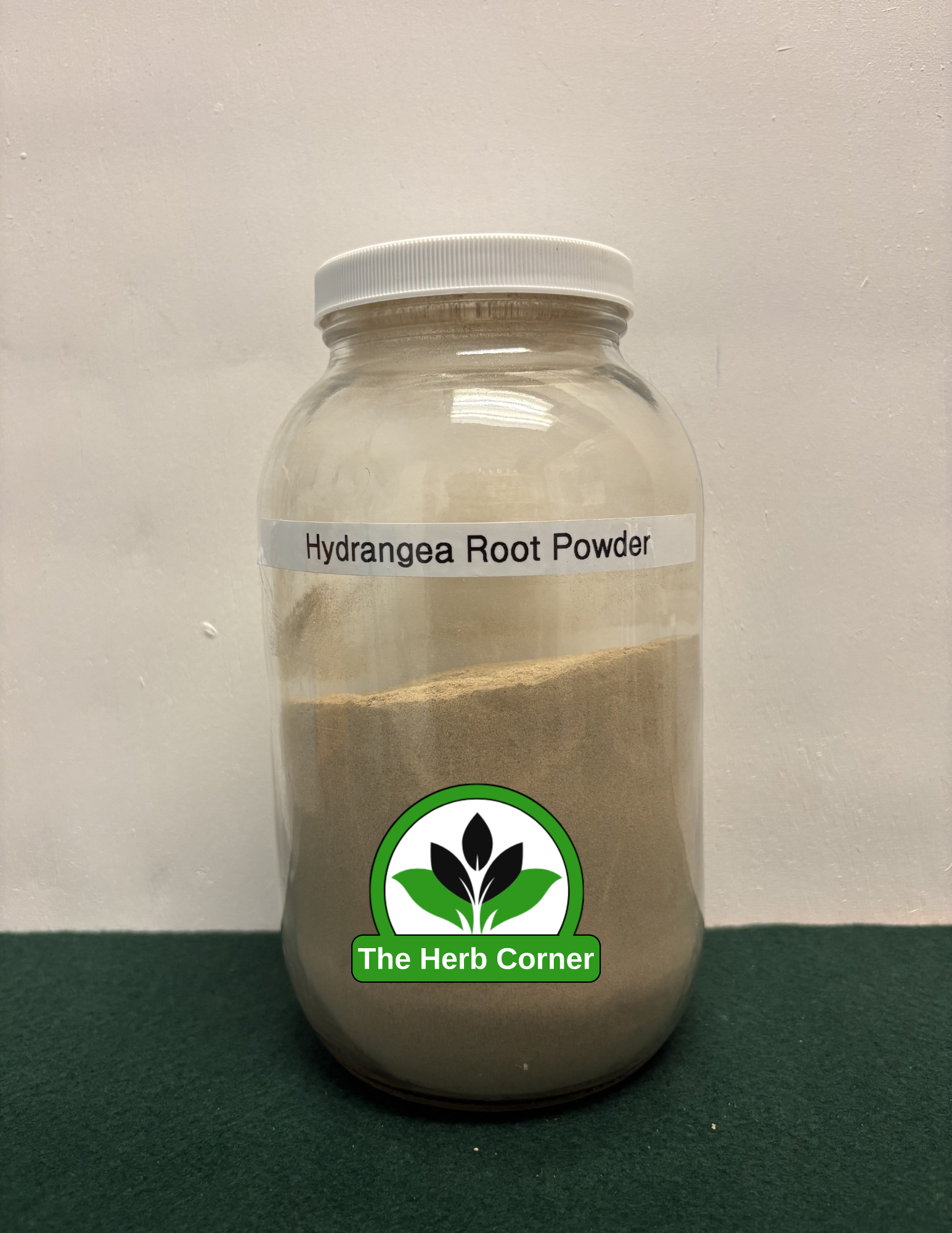
Traditional Use: Used extensively by Native American peoples and early American herbalists as a urinary tonic and kidney remedy; traditionally prescribed for kidney stones, urinary gravel, enlarged prostate, urinary tract infections, rheumatism, and as a diuretic and anti-inflammatory for chronic bladder complaints.
Potential Benefits: Hydrangin, saponins, and flavonoids deliver diuretic, anti-inflammatory, antilithic (stone-preventing), and smooth muscle-relaxing effects; traditionally valued for dissolving and preventing kidney and bladder stones, relieving prostate-related urinary flow restriction, and soothing urinary tract inflammation.
Warnings: Avoid in pregnancy and kidney disease; high doses cause dizziness, nausea, chest tightness, and vomiting — use within recommended therapeutic ranges only; may potentiate diuretic medications; long-term high-dose use not recommended without professional supervision; ensure correct plant identification as some ornamental hydrangea species contain higher levels of toxic compounds.

Reviews
There are no reviews yet.