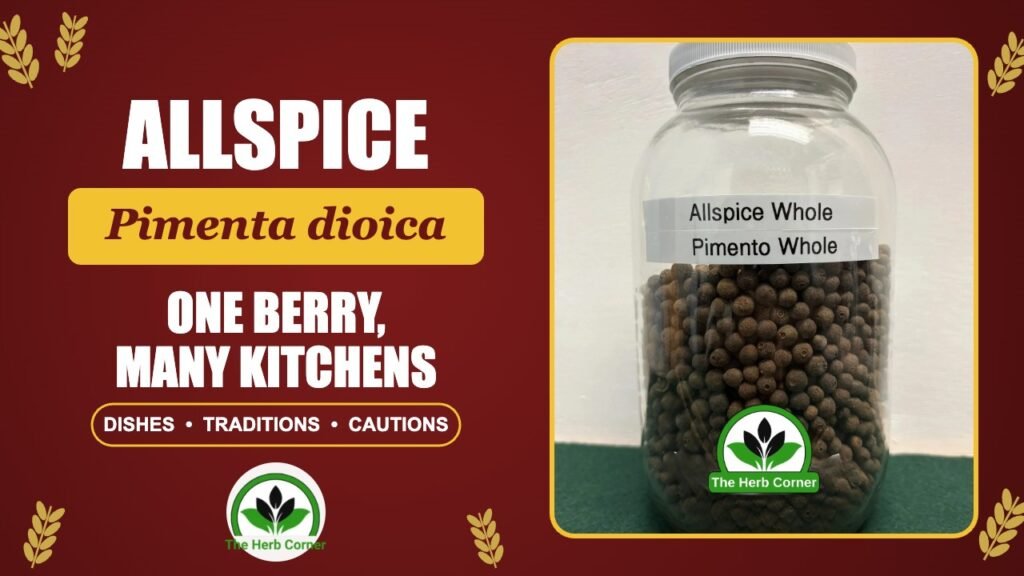
Allspice is not a blend. It is a single dried berry from the Pimenta dioica tree, a member of the myrtle family native to southern Mexico, Central America and the Caribbean. Its warm aroma reminds many people of cloves, cinnamon and nutmeg at once, which is how it earned its name. Jamaica remains its best-known source, and it is also called pimento or Jamaica pepper.
Please note: This article is for educational purposes only and reflects traditional and culinary uses. The Herb Corner does not give medical advice. Every reader should check with a certified medical professional before using any of our products.
Where Allspice Comes From
Allspice grows as an evergreen tree in the humid tropical forests of Mesoamerica and on Caribbean islands such as Jamaica and Cuba. Allspice is made from the dried, unripe fruits, which are mainly cultivated in and exported from Jamaica. Mexico, Honduras and Cuba also grow it commercially.
Five Dishes That Rely on Allspice
- Jerk chicken (Jamaica). Allspice, called pimento in Jamaica, is a key ingredient in jerk seasoning, along with thyme, ginger and hot peppers.
- Alcatra (Terceira, Azores, Portugal). A slow-cooked beef pot roast baked in an unglazed clay pot with wine, bacon, bay leaf and whole allspice berries.
- Kibbeh (Lebanon). Lebanon’s national dish of minced meat and bulgur is seasoned with “seven spices” (sabaa baharat), a blend that uses allspice as its base.
- Cincinnati chili (United States). This regional favorite, often served over pasta, owes part of its distinctive warmth to allspice.
- Swedish meatballs (Sweden). A pinch of ground allspice gives the classic meatballs their gentle, peppery-sweet note.
Allspice also shows up in pumpkin pie, gingerbread, mulled drinks, pickling brines and barbecue sauces. Whole berries hold their aroma longer than ground allspice, so many cooks grind them fresh.
How Three Regions Have Used Allspice Traditionally
All parts of the plant, including the berries, leaves and bark, have a long history in folk medicine. A 2012 scientific review of the plant describes these regional traditions:
- Costa Rica: Allspice has traditionally been used for indigestion (dyspepsia) and has also been used in folk practice for diabetes. This is a traditional use only and never a substitute for diabetes care.
- Guatemala: Crushed allspice berries have traditionally been applied to bruises, sore joints and aching muscles.
- Cuba: Allspice is traditionally combined with other herbs in mixtures used to ease indigestion.
Beyond these regions, allspice tea has been used in folk practice for colds, menstrual cramps and upset stomach, and pimento oil and pimento water once appeared in the British Pharmacopoeia of 1898. Much of the plant’s aroma comes from eugenol, the same compound found in cloves. Laboratory research has found that compounds in allspice have antioxidant and antibacterial activity, and researchers suggest eugenol may contribute to the anti-inflammatory effects described in traditional medicine.
What the science says today: These are traditional uses, not proven treatments. Reference sources rate the evidence for allspice in conditions like indigestion and gas as insufficient, and there are no clinical studies to support medicinal dosing. Enjoy allspice as a food, and talk with a healthcare provider before using it for a health concern.
Warnings and Cautions
- Food amounts are generally safe. Allspice is considered safe for most adults in the amounts used in cooking. There is not enough reliable information on its safety in larger, medicinal amounts.
- Pregnancy and breastfeeding: Stick to normal food amounts. Avoid medicinal amounts, supplements and essential oil.
- Allergies and skin: Some people are allergic to allspice. Its oil and eugenol can irritate the skin, mouth and stomach, and can cause contact dermatitis in sensitive people.
- Essential oil: Concentrated allspice oil is much stronger than the spice. Eugenol can be toxic in high concentrations. Never swallow essential oils, and keep them away from children.
- Surgery: Because allspice might slow blood clotting, there is some concern it could increase bleeding during and after surgery. Stop medicinal use before a scheduled surgery and tell your surgeon.
Allspice and Medications
The most important interaction involves drugs that slow blood clotting. Eugenol has antiplatelet activity in laboratory research, so taking allspice in medicinal amounts with these drugs might increase the risk of bruising and bleeding. This interaction is considered theoretical and has not been reported in people, but it is rated as moderate, so caution is the right approach.
- Anticoagulants such as warfarin (Coumadin), apixaban (Eliquis), dabigatran (Pradaxa), heparin and enoxaparin (Lovenox)
- Antiplatelet drugs such as aspirin and clopidogrel (Plavix)
If you take any of these medications, use allspice only in normal cooking amounts and speak with your doctor or pharmacist before using allspice tea, extracts, supplements or oil. Never start, stop or change a medication on your own.
Find Allspice at The Herb Corner
Browse our Allspice Whole and Allspice Powder, or visit the store in Melbourne, Florida, and ask us about cooking with it.
The Herb Corner does not give medical advice. Please check with a certified medical professional before using any of our products. These statements have not been evaluated by the Food and Drug Administration. This product is not intended to diagnose, treat, cure or prevent any disease. Consult a qualified healthcare provider before using any herb for medicinal purposes, especially if you are pregnant, nursing, taking medication or have a medical condition.
Sources
- Zhang L, Lokeshwar BL. Medicinal properties of the Jamaican pepper plant Pimenta dioica and Allspice. Current Drug Targets, 2012 (PMC3891794)
- Royal Botanic Gardens, Kew: Plants of the World Online, Pimenta dioica
- Machuca P, et al. Past and present of allspice (Pimenta dioica) in Mexico and Guatemala. Revue d’ethnoécologie, 2020
- WebMD: Allspice, uses, side effects and interactions
- RxList: Allspice
- Natural Medicines (Therapeutic Research Center) via Vital.ly: Allspice monograph
- Drugs.com: Allspice (professional monograph)
- Hello Pharmacist (Therapeutic Research Center data): Allspice drug interactions
- Visit Azores: Alcatra recipe
- SBS Food: Baked kibbeh (kibbeh bil sayneeyeh)
- The Matbakh: Lebanese 7 Spice Blend (Sabaa Baharat)
- McCormick Ground Allspice product description (Cincinnati chili, Swedish meatballs, jerk seasoning)
- Insanely Good Recipes: Allspice recipes, including jerk chicken and Cincinnati chili

